Glaciers and fjords
Rivers of ice, and the valleys they cut.
Terra Terra Collections Glaciers and fjords
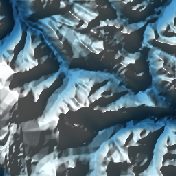
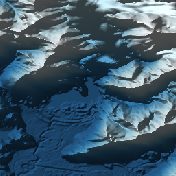
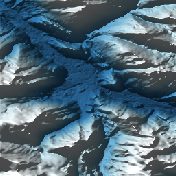
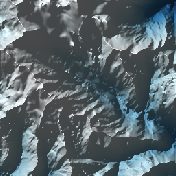
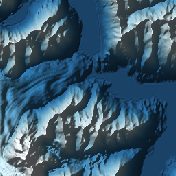
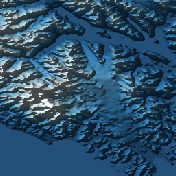
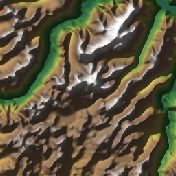
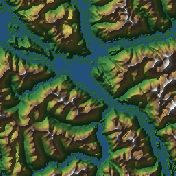
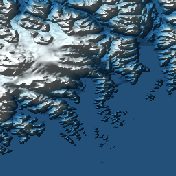
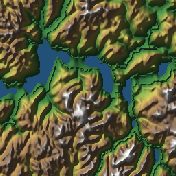
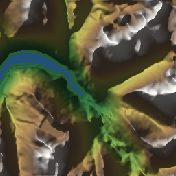
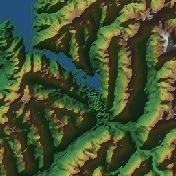
Glaciers are slow rivers of ice, and fjords are the valleys they carved and the sea later filled. From the Alps and Alaska to Norway, Greenland and New Zealand, these are the places where the shape of the land is plainest to see, built from real elevation data. Ice itself is not in the data, so a glacier shows as the broad trough it fills.
20 stops · read them in order, or jump to the one you want
Jump to a stop
- 1Jostedalsbreen, Norway
- 2Franz Josef Glacier, New Zealand
- 3Mer de Glace, France
- 4Vatnajökull, Iceland
- 5Columbia Icefield, Alberta, Canada
- 6Mendenhall Glacier, Alaska
- 7Exit Glacier, Alaska
- 8Pasterze and Grossglockner, Austria
- 9Rhône Glacier, Switzerland
- 10Ilulissat Icefjord, Greenland
- 11Matanuska Glacier, Alaska
- 12Aletsch Glacier, Switzerland
- 13Perito Moreno Glacier, Argentina
- 14Glacier Bay, Alaska
- 15Nærøyfjord, Norway
- 16Doubtful Sound, New Zealand
- 17Kenai Fjords, Alaska
- 18Sognefjord, Norway
- 19Geirangerfjord, Norway
- 20Milford Sound, New Zealand
Compare the stops
Across these 20 places, the highest ground is at Mer de Glace, reaching 4,165 m, and the lowest high point is Ilulissat Icefjord at 483 m. Glacier Bay has the most relief, 3,783 m from lowest to highest point, while Ilulissat Icefjord is the flattest at 483 m. The steepest ground, on average, is at Milford Sound, sloping at 33.9 degrees. Measured from real elevation data, most relief first.
| Place | Highest | Relief | Average slope | Cross-section |
|---|---|---|---|---|
| Glacier Bay, Alaska | 3,783 m | 3,783 m | 18.2° | |
| Aletsch Glacier, Switzerland | 4,082 m | 3,356 m | 25.2° | |
| Mer de Glace, France | 4,165 m | 3,112 m | 30.9° | |
| Milford Sound, New Zealand | 2,704 m | 2,704 m | 33.9° | |
| Pasterze and Grossglockner, Austria | 3,784 m | 2,486 m | 27.7° | |
| Franz Josef Glacier, New Zealand | 2,618 m | 2,404 m | 29.3° | |
| Matanuska Glacier, Alaska | 2,645 m | 2,189 m | 25.9° | |
| Perito Moreno Glacier, Argentina | 2,333 m | 2,161 m | 17.7° | |
| Jostedalsbreen, Norway | 1,966 m | 1,932 m | 17.5° | |
| Columbia Icefield, Alberta, Canada | 3,479 m | 1,911 m | 18.9° | |
| Kenai Fjords, Alaska | 1,857 m | 1,857 m | 11.6° | |
| Mendenhall Glacier, Alaska | 1,781 m | 1,781 m | 23.2° | |
| Geirangerfjord, Norway | 1,769 m | 1,769 m | 25.8° | |
| Nærøyfjord, Norway | 1,748 m | 1,748 m | 21.4° | |
| Sognefjord, Norway | 1,744 m | 1,744 m | 15.2° | |
| Exit Glacier, Alaska | 1,551 m | 1,511 m | 27.2° | |
| Rhône Glacier, Switzerland | 3,262 m | 1,498 m | 24.3° | |
| Doubtful Sound, New Zealand | 1,413 m | 1,413 m | 26.9° | |
| Vatnajökull, Iceland | 1,793 m | 1,307 m | 2° | |
| Ilulissat Icefjord, Greenland | 483 m | 483 m | 1.4° |
-
Jostedalsbreen, Norway
The largest glacier on mainland Europe, an ice cap with arms reaching down toward the fjords.
Rises to 1,966 m with 1,932 m of relief; rugged ground.
-
Franz Josef Glacier, New Zealand
A glacier that flows from the Southern Alps almost to a temperate rain forest.
Rises to 2,618 m with 2,404 m of relief; very steep ground.
-
Mer de Glace, France
France's longest glacier, a river of ice below Mont Blanc above Chamonix.
Rises to 4,165 m with 3,112 m of relief; very steep ground.
-
Vatnajökull, Iceland
Europe's largest ice cap by volume, sitting on top of active volcanoes.
Rises to 1,793 m with 1,307 m of relief; very gentle ground.
-
Columbia Icefield, Alberta, Canada
The biggest icefield in the Canadian Rockies, feeding rivers to three oceans.
Rises to 3,479 m with 1,911 m of relief; rugged ground.
-
Mendenhall Glacier, Alaska
A retreating glacier that ends in a lake a short drive from Juneau.
Rises to 1,781 m with 1,781 m of relief; rugged ground.
-
Exit Glacier, Alaska
A tongue of the Harding Icefield you can walk toward in Kenai Fjords National Park.
Rises to 1,551 m with 1,511 m of relief; very steep ground.
-
Pasterze and Grossglockner, Austria
Austria's highest peak above its longest glacier, with a famous high road.
Rises to 3,784 m with 2,486 m of relief; very steep ground.
-
Rhône Glacier, Switzerland
The source of the Rhône river, an ice tongue beside the Furka Pass.
Rises to 3,262 m with 1,498 m of relief; rugged ground.
-
Ilulissat Icefjord, Greenland
A fjord choked with icebergs from one of the fastest glaciers on Earth.
Rises to 483 m with 483 m of relief; very gentle ground.
-
Matanuska Glacier, Alaska
A 40 km valley glacier you can reach by road, one of the largest in Alaska.
Rises to 2,645 m with 2,189 m of relief; very steep ground.
-
Aletsch Glacier, Switzerland
The longest glacier in the Alps, about 20 km of ice.
Rises to 4,082 m with 3,356 m of relief; very steep ground.
-
Perito Moreno Glacier, Argentina
A huge glacier ending in a wall of ice above Lake Argentino.
Rises to 2,333 m with 2,161 m of relief; rugged ground.
-
Glacier Bay, Alaska
A fjord system where glaciers meet the sea and the Fairweather Range.
Rises to 3,783 m with 3,783 m of relief; rugged ground.
-
Nærøyfjord, Norway
A narrow arm of the Sognefjord, a World Heritage fjord between steep walls.
Rises to 1,748 m with 1,748 m of relief; rugged ground.
-
Doubtful Sound, New Zealand
A remote New Zealand fjord, deeper and quieter than the better known Milford Sound.
Rises to 1,413 m with 1,413 m of relief; very steep ground.
-
Kenai Fjords, Alaska
Glaciers flowing from the Harding Icefield down to fjords on the Gulf of Alaska.
Rises to 1,857 m with 1,857 m of relief; hilly ground.
-
Sognefjord, Norway
The longest and deepest fjord in Norway, 200 km from sea to glacier.
Rises to 1,744 m with 1,744 m of relief; rugged ground.
-
Geirangerfjord, Norway
A fjord so deep and steep it is a World Heritage Site.
Rises to 1,769 m with 1,769 m of relief; very steep ground.
-
Milford Sound, New Zealand
Mitre Peak rising almost 1,700 m straight out of a fjord.
Rises to 2,704 m with 2,704 m of relief; very steep ground.